
Nondestructive surface testing

Liquid penetrant

Surface examination

Liquid penetrant examination

A nondestructive method of revealing discontinuities that are open to the surfaces of solid and essentially nonporous materials.

Indications across a wide spectrum of flaw sizes can be found regardless of workpiece configuration or flaw orientation. Liquid penetrants seep into minute surface openings by capillary action.

The process is well suited to detecting surface cracks, laps, porosity, shrinkage areas, laminations and similar discontinuities. It is widely used on wrought and cast ferrous and nonferrous metals, powder metallurgy parts, ceramics, plastics and glass objects.

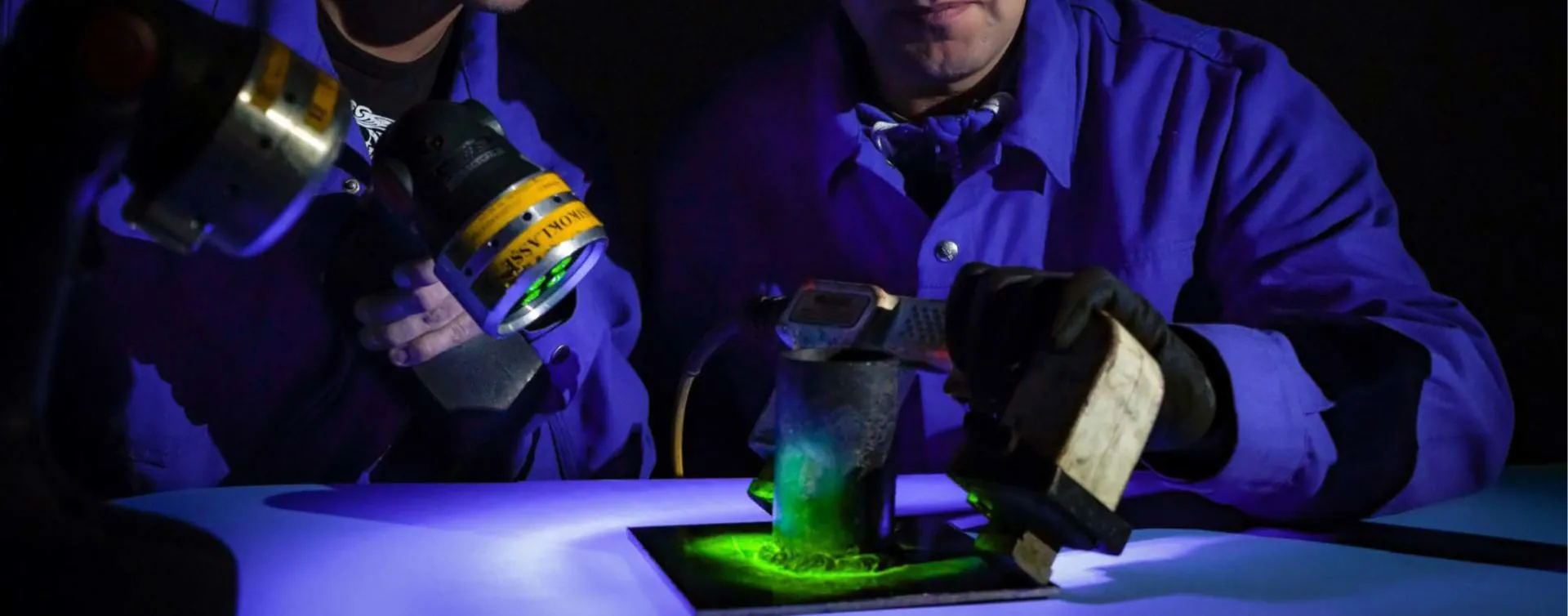
Technician performing a nondestructive surface examination
Direct examination reveals surface-breaking discontinuities before they become larger concerns.

Industry terminology

One method, several familiar names.

  • PTPenetrant Testing
  • LPLiquid Penetrant Testing
  • DPDye Penetrant Testing

The American Society for Nondestructive Testing uses the name liquid penetrant testing. ASME Boiler and Pressure Vessel Code and the National Board Inspection Code use liquid penetrant examination.

The first documented use of PT was in the railroad industry.

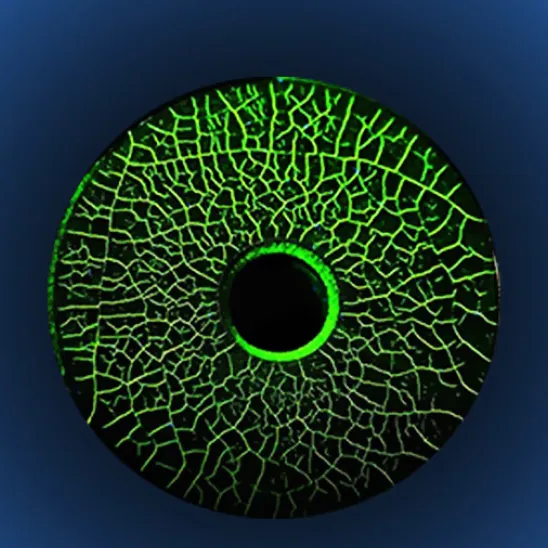
Fluorescent penetrant inspection under ultraviolet light

Methods & applications

Two proven approaches to surface inspection.

Historic oil and whiting penetrant indication

The original process

Oil and whiting method

Cast railroad wheels were dipped in used oil, dried and coated with powdered chalk or a suspension of chalk in alcohol.

After the wheels dried, oil stored in a flaw would bleed into the chalk and become visible.
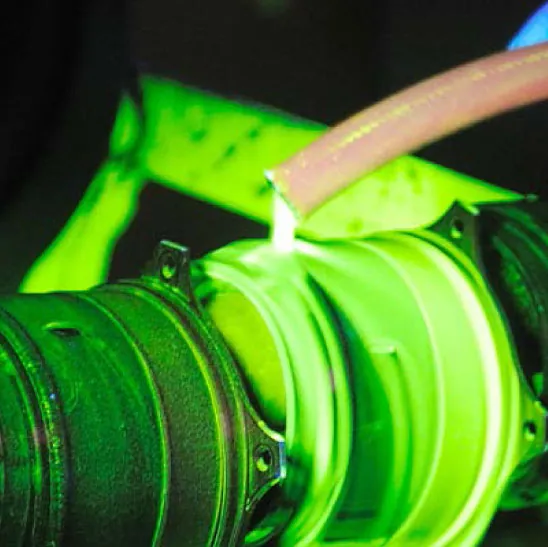
Dye penetrant inspection materials and application

Portable and versatile

Dye penetrant solvent-removable method

This is the most popular approach because it is economical and highly versatile. It typically uses three aerosol cans: cleaner, penetrant and developer.

The portable system can be taken up ladders, inside boilers, into pits and other restricted-access areas. Most nonporous materials—including steel, stainless steel, cast iron, aluminum, brass, bronze, titanium, rubber, plastics and glass—can be examined using PT.

Barracuda provides a full range of economical liquid penetrant services.

From high-volume production to individual large and complex objects, we offer responsive turnaround and dependable results.
Contact our experts